WORCESTER —
photoString+='
'+unescape('')+'
Enlarge photo'
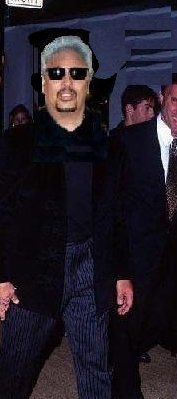
The small, elderly man’s soft, raspy voice and frail appearance completely belie a past as notorious as that of practically anyone ever associated with the New England mob.
photoString+='
'+unescape('')+'
Enlarge photo'
Now 88, Carlo Mastrototaro — who by many accounts, but not his own, ruled Mafia activity in Worcester for much of the latter half of the last century — would seem a highly unlikely confederate to the growing number of borrowers and investors who claim they were ripped off by LBM Financial LLC, a Marlboro “hard-money” lending company.
photoString+='
'+unescape('Brian%20W.%20Thompson')+'
Enlarge photo'
Clearly motivated by anger, Mr. Mastrototaro recently agreed to talk to a reporter, something he says he’s never done before. Among points raised in that interview, as well as through reviews of lawsuits targeting LBM and related depositions and other filings, are the following:
');
//-->
photoString+='
'+unescape('Marcello%20M.%20Mallegni')+'
Enlarge photo'
• Mr. Mastrototaro claims that he arranged a meeting in 2000 between Marcello M. Mallegni, LBM president and owner of record, and David G. “Duddie” Massad, the well-known city philanthropist, chairman of Commerce Bank & Trust and former car dealer, a meeting that he says led to a partnership between the two men.
photoString+='
'+unescape('Nicholas%20J.%20Fiorillo')+'
Enlarge photo'
In exchange for putting the small loan company together with one of the region’s wealthiest men, Mr. Mastrototaro says he was to receive a fee of 1 percent of each loan made by LBM. He says LBM reneged on the alleged agreement. A lawyer for LBM said no such arrangement ever existed.
photoString+='
'+unescape('David%20G.%20%93Duddie%94%20Massad')+'
Enlarge photo'
• Mr. Mastrototaro said he has known Mr. Massad nearly all his life and until recent years considered him a friend. Four former law enforcement officials who had Mr. Mastrototaro under surveillance at different times over decades said the two men were known to be friends. The bank chairman adamantly denies that they ever were friends, saying through a lawyer that he only sold Mr. Mastrototaro cars over the years. • Despite his reputation and criminal record, Mr. Mastrototaro was paid a $30,000 “broker’s fee” by a local real estate developer for his role in arranging a $3 million loan from Commerce Bank, according to that developer. A lawyer for Mr. Massad flatly denied any assertion of wrongdoing by his client, including those allegations contained in a number of pending racketeering lawsuits, and maintained that Mr. Massad has no role whatsoever in the operation of LBM or any dealings it had with Mr. Mastrototaro. “Throughout all of these specious and outrageous allegations, they uniformly fail to allege or contend interaction with Mr. Massad directly. They’re all suggesting that someone told them that Mr. Massad did something,” according to the lawyer, David H. Rich, who said Mr. Massad would not comment himself. LBM’s lawyer, Jeffrey D. Ganz, contradicted almost every aspect of Mr. Mastrototaro’s version of events. He said it was a Commerce Bank loan officer, not Mr. Mastrotoraro, who first introduced the bank chairman and Mr. Mallegni. He said Mr. Mastrotoraro was never promised a cut of LBM loans and that Mr. Mastrotoraro and his wife were paid all the interest they were due in connection with one loan they funded. “These allegations just don’t hold up,” Mr. Ganz said. For his part, Commerce Bank President Brian W. Thompson said he has never even heard of Mr. Mastrototaro and that the bank would not allow a broker’s fee to be paid out of a loan without written authorization from the borrower. “We’re very confident that whatever the bank has done is consistent with normal banking procedures,” he said. LBM is the focal point of at least a dozen state and federal court lawsuits alleging that the borrowers were victims of schemes orchestrated to ensure their failure and enable the firm to wrest control of their property. The common theme in the lawsuits is that the firm used “loan-to-own” tactics designed to financially sabotage construction projects in order to take them over through foreclosure or, failing that, to use the delays created to run up the payoff amount on the loan by piling on fees, penalties and default interest rates. The firm offers short-term, high-interest loans — known in the industry as “hard money” loans — to developers in the early stages of construction projects. LBM’s lawyer has attributed the flurry of lawsuits to failed and desperate developers trying to avoid repaying millions of dollars they borrowed from the firm. State records show LBM was incorporated in 1996 by Mr. Mallegni of Southboro. Mr. Massad has said he has no formal role in the operation of LBM but, through other companies he has an interest in, has put up some of the money lent by the firm. Interviewed at the Leatherneck Lounge at the Marine Corps League on Lake Avenue, Mr. Mastrototaro, a WWII combat veteran, told the Telegram & Gazette that in 2000 he set up a meeting between Mr. Massad and Mr. Mallegni, who, he said, was anxious to enlist Mr. Massad’s financial backing. In his version of the formation of the association between Mr. Massad and Mr. Mallegni, Mr. Mastrototaro said that the two agreed that he would receive one point — 1 percent — of each loan made by LBM. The agreement, he acknowledged, was not put on paper. “I’ve always taken people at their word, and my word is good in return,” Mr. Mastrototaro said. Mr. Ganz, the LBM lawyer, called the alleged agreement “just false.” “That’s not the way LBM does business. It never agreed to pay anybody a 1 point broker’s fee,” he said. However it happened, Mr. Massad’s involvement with LBM appears to have boosted the firm’s prospects.A review of LBM loans on file with several registries of deeds offices confirms that LBM’s volume of business increased dramatically after Mr. Massad began investing in the firm’s loans. Between 1996 and 2000, LBM made about $40 million in loans to developers in Worcester, Barnstable, Middlesex and Suffolk counties. Records in other jurisdictions were not examined. Since 2000 and Mr. Massad’s involvement, however, LBM has made more than $200 million in loans for construction projects in those same four counties, according to registry of deeds records in the four jurisdictions. If Mr. Mastrototaro’s assertion that he was to receive 1 percent of each loan extended by LBM is correct — an assertion strenuously denied by the firm — he would be owed more than $2 million. His anger boiled over, he said, following a transaction between his wife and LBM. He alleges that the firm failed to pay her at least $14,000 in interest from a $500,000 investment she made with the company. He said his wife made $500,000 through the sale of family property in Buffalo, N.Y., in 2007. The couple invested the money with Mr. Mallegni and LBM that year, for which he said she was to be paid 8 percent interest. The investment was to last no more than a year, he said. LBM, both sides of the dispute acknowledge, loaned the money to Louis Cheschi, owner of the Café Sorrento restaurant in Milford, and a friend of Mr. Mastrototaro’s. Mr. Cheschi last week declined to comment on the transaction.
In a deposition taken last October in connection with a 2007 lawsuit filed against LBM, Mr. Mallegni, Mr. Massad and others by Worcester real estate developer Nicholas J. Fiorillo, Mr. Mallegni was questioned about the loan to Mr. Cheschi. Although Mr. Mastrototaro and Mr. Cheschi are friends, Mr. Mallegni states that Mr. Mastrototaro insisted that the $500,000 be funneled through LBM instead of lending it directly to the restaurateur. Mr. Mallegni said that he never really understood “why I need to get in the middle” of the transaction, but that “to accommodate Louie (Cheschi) and to accommodate Carlo (Mastrototaro) we did that.” When the loan was repaid in mid-2008, Mr. Mallegni says in his deposition, he immediately paid Mr. Mastrototaro what was owed him. Mr. Mastrototaro, however, claims the $500,000 wasn’t returned until well after a month had passed and then only after considerable badgering by him. He said his wife was not paid any interest on her investment. Mr. Ganz said his client made regular interest payments to the Mastrototaros during the course of the loan and then repaid the principal once Mr. Cheschi paid back the loan. “The loan was paid in full with interest,” he said.While it was Mr. Mallegni who he dealt with at LBM, Mr. Mastrototaro said he personally blames Mr. Massad for the situation. “That guy doesn’t do anything without Duddie’s approval,” he said of Mr. Mallegni. “He prays to one god,” he said of Mr. Massad. “That god’s name is M-O-N-E-Y.” Similar accusations about Mr. Mallegni’s reliance on Mr. Massad have been leveled by several of the Massachusetts real estate developers who have sued LBM, Mr. Mallegni and Mr. Massad. Those accusations appear at least somewhat supported by Mr. Mallegni’s response to a question asked of him during his deposition taken last October in the Fiorillo lawsuit Asked if he had discussed details of a particular loan with Mr. Massad, Mr. Mallegni answered: “Yes, he’s my 50 percent partner. I have to let him know what’s happening.” That particular loan was one in which Mr. Massad had put up a portion of the money, according to Mr. Ganz. “What is true is where Duddie is a participant, they make decisions together,” he said. Mr. Rich, one of Mr. Massad’s lawyers, said his client had no role in the transaction involving Mr. Mastrototaro. “If Mr. Mallegni had any arrangements with this person, Mr. Massad was not a party to any contracts, any agreements, any understandings whatsoever. He was not there. He knows nothing of it,” Mr. Rich said. Mr. Mastrototaro apparently did receive a percentage of at least one LBM-related loan. Robert Depietri of Worcester alleges in a federal racketeering lawsuit he filed in 2007 against LBM, Mr. Mallegni and others, and in a deposition and other related court documents, that he paid Mr. Mastrototaro and an associate $30,000 out of the proceeds of a $3 million loan from Commerce Bank in 2000. Mr. Depietri, who declined to be interviewed, alleges in his lawsuit and related documents that he and his partners, who own and manage the Chase Building at 44 Front St., attempted to consolidate a first mortgage held by a Boston bank and a second mortgage held by LBM into a single loan. At Mr. Mallegni’s suggestion, Mr. Depietri said he contacted Mr. Massad at Commerce Bank about the refinancing. In September 2000, he states, Commerce issued a loan commitment for $3 million, which included a $30,000 loan origination fee that he and his partners had agreed to pay. At the loan closing, however, Mr. Depietri states that his lawyers noticed a second $30,000 fee on the settlement statement. After questioning the additional charge, Mr. Depietri said he was escorted to another room by Mr. Mallegni, who allegedly told him that the loan would not be closed unless he agreed to the $30,000 fee. Mr. Depietri alleges that Mr. Mallegni told him that the additional fee was at the insistence of Mr. Massad and was to go to two men, who were described as “advisers” to Mr. Massad, who were seated in the lobby. Mr. Depietri said he was desperate for the refinancing and had no alternative but to go along. He said later he learned that one of the men was Mr. Mastrototaro, whom he had never heard of at that point. In a deposition taken in another lawsuit, Mr. Mallegni acknowledged that Mr. Mastrototaro received the broker’s fee, but said that Mr. Dipietri requested the payment because he had retained Mr. Mastrototaro as a broker. Mr. Depietri’s lawsuit also states that in the summer of 2006, Mr. Mastrototaro came to his home unexpectedly to talk about help he had been giving Mr. Fiorillo with his lawsuit against LBM. He said Mr. Mastrototaro “recommended I didn’t get involved with the situation.” Mr. Depietri, who said he was aware of Mr. Mastrototaro’s criminal background by that point, said he was shocked by the visit, but did not feel threatened. “I didn’t know who sent him there,” Mr. Depietri stated, “but obviously somebody did.” In his interview with the T&G, Mr. Mastrototaro would say only that his presence at the closing and later at Mr. Depietri’s house was not intended to threaten or intimidate anyone. “I don’t do that sort of thing,” he said. Mr. Mastrototaro’s police record, which dates to 1945, includes Massachusetts and federal court convictions and prison sentences for interstate travel in aid of racketeering, conspiracy to commit wire fraud, gambling and receiving stolen property, as well as several other lesser charges. In 1971, he was convicted in a U.S. District Court in Baltimore of aiding and abetting in the transportation of three U.S. Treasury bills stolen in New York City and transferred to Baltimore. Mr. Mastrototaro’s conviction and 9-year prison sentence were upheld in 1972 by a federal appeals court. He was accused of paying $25,000 for the three treasury bills, each with a face value of $100,000, to the man who stole them, Boston and Providence mob figure Vincent “Big Vinnie” Teresa. In exchange for a reduced sentence, Mr. Teresa, who in 1973 would write a tell-all book called “My Life in the Mafia,” agreed to testify against Mr. Mastrototaro in the aiding and abetting case and also against Meyer Lansky, a notorious figure in mob annals who was regarded as a financial genius. According to Thomas J. Foley, former superintendent of the Massachusetts State Police, Mr. Mastrototaro reported in the 1980s and ’90s to the Genovese crime family in New York with the tacit approval of Raymond L.S. Patriarca of Providence, regarded as the boss of organized crime bosses in New England until his death in 1984. Mr. Foley and other former and current law enforcement officials said in recent interviews that surveillance operations indicated Mr. Mastrototaro and Mr. Massad were friends for decades. Mr. Massad was never linked to any of Mr. Mastrototaro’s criminal activities, Mr. Foley said. Mr. Massad’s lawyer said his client and Mr. Mastrototaro were never friends. “It would be fair to say that he knows him and has interacted with him in a very limited capacity,” Mr. Rich said. “He’s certainly not a business partner or colleague or friend in any meaningful way.” In his 1973 book about the Mafia in New England, Mr. Teresa described Mr. Mastrototaro as “the boss of Worcester” and was considered “the fourth most powerful boss in the current New England hierarchy of crime.” The book frequently refers to Mr. Mastrototaro, linking him to Mafia-backed casinos that operated in Haiti and Cuba, as well as to Mr. Lansky. Mr. Teresa makes a few references to Mr. Mastrototaro’s reputation for having “short arms,” that is, for being extremely cheap. “He’s a multi-millionaire,” Mr. Teresa wrote, “but if you were to open the trunk of his car at any time, you’d find rolls of twenty-five-cent slugs that he used in telephone booths to save money on phone calls. He has beautiful clothes, but he never went to a store to buy them — he buys from boosters (small time thieves).” Despite his testimony that helped convict Mr. Mastrototaro in the Baltimore case, Mr. Teresa, who died in 1990 while in the federal witness protection program, seemed to have some admiration for the Worcester mob figure. “As cheap as he was, he was as honest as they come in the mob when you dealt with him,” Mr. Teresa wrote of Mr. Mastrototaro. “If you had a cent and half coming from him, it didn’t make a bit of difference if you didn’t show up to collect for six months. When you got there, the money was there waiting for you. He never tried to beat anybody in the mob.” Mr. Foley recalled that as part of one investigation, state police had Mr. Mastrototaro under surveillance in the mid-1990s as he headed to Western Massachusetts for a clandestine meeting in a bugged cabin with other “capos.” He said the officers tailing Mr. Mastrototaro saw him enter a Shrewsbury supermarket and stuff steaks and other items in his clothing, before taking off for the meeting in the Berkshires. Once inside the cabin, according to Mr. Foley, state police investigators listened to wiretapped conversations that included the Worcester crime leader and other mobsters bragging about their shoplifting exploits. More recently he was convicted of shoplifting in Auburn in 2003 and Shrewsbury in 2005, and paid fines of $200 and $250, respectively. By his own account, Mr. Mastrototaro is a “retired businessman” and during the interview determinedly steered clear of answering questions about businesses he was involved in before retiring. “Different things,” he said of his former occupations, adding when asked about news stories identifying him as an organized crime figure that “not everything said about me is true.”